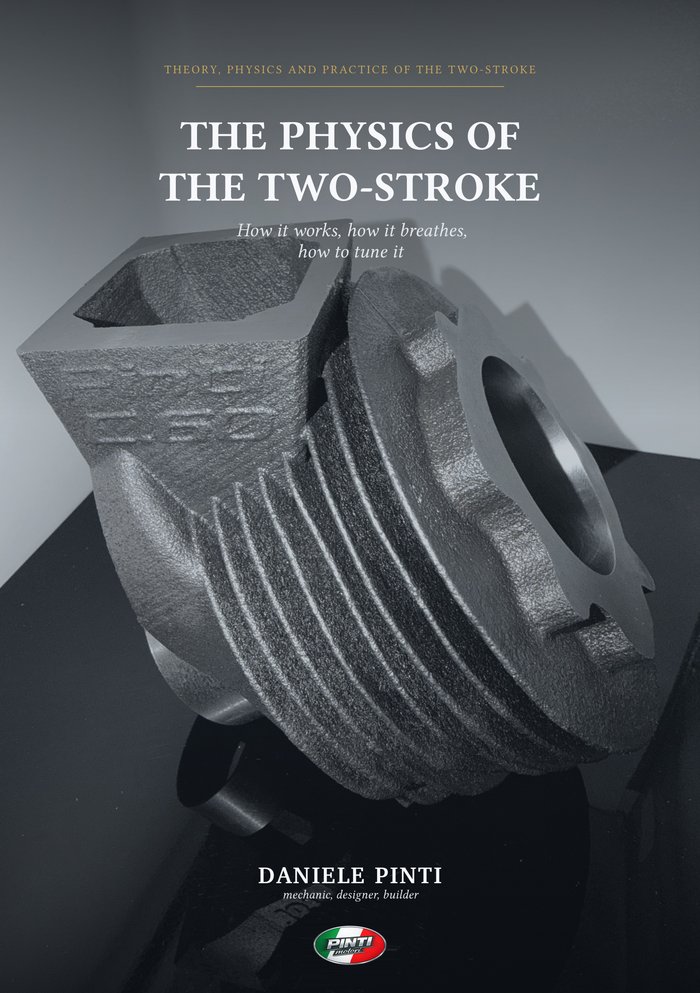
Cover: The Physics of the Two-Stroke, by Daniele Pinti

The book

The Physics of the Two-Stroke

How it works, how it breathes, how to tune it

Thirty years of workshop, foundry and dyno in one manual. Inside is the physics behind every extra horsepower, and the practical way to find it in the workshop: formulas actually used, measurements, numbers and curves read on the dyno.

about 510 pages · 119 technical figures · 53 photographs · paperback

The book is available in 6 languages. Pick yours:

What's inside

~510pages
27chapters
119technical figures
53photographs

The curves are real and come from the Pinti Motori dyno archive. The examples are taken from real engines: classic scooters, karts, motocross and enduro bikes, minimotos. There are also the “From the workshop” stories, taken from everyday workshop life.

You do not need to be an engineer. The formulas are explained step by step, with worked examples, and every chapter comes back to the workbench.

The 27 chapters

  1. Where it all began: what a two-stroke is (and how it breathes)
  2. Cooling: keeping the fire under control
  3. Intake: reed valve, rotary disc and piston port
  4. The expansion chamber: the wave that pushes
  5. The piston: forces, clearances and the signals it sends
  6. Piston rings, wrist pin and circlips
  7. The crankshaft and the con rod: the heart nobody sees
  8. Ignition advance: two degrees that change everything
  9. The spark plug: the first instrument for understanding the engine
  10. Cast-iron and aluminum cylinders: learning from fire and metal
  11. Intake and exhaust port timing: retiming the ports with understanding
  12. The compression ratio: what the engine really sees
  13. The exhaust power valve: the variable character of the two-stroke
  14. Fuel octane: when you really need it
  15. Lubrication and premix: no fooling around
  16. The crankcase pump: volume, flow and optimization
  17. The cylinder transfers: how to bring in the new without losing it
  18. Squish and cylinder head: turbulence and order in the chamber
  19. Bore and stroke: the temperament of the engine
  20. Detonation: the silent enemy
  21. Intake manifold and carburetor: giving the engine the right mixture
  22. Tuning a two-stroke: bringing it all into harmony
  23. The dyno: the Wailing Wall
  24. Maintenance and setup: making the power last
  25. From glory to rebirth: history, decline and future of the two-stroke
  26. The dream before the engine
  27. Let me tell you a little about myself

Who it's for

Tuners and mechanics

For anyone who wants to understand the why behind every modification, before picking up the grinder.
Enthusiasts

Classic scooters, karts, motocross, enduro and minimoto: for people who ride two-strokes, strip them down and love them.

Students and teachers

Technical and vocational schools: thermodynamics and fluid dynamics applied to a real engine.
The author

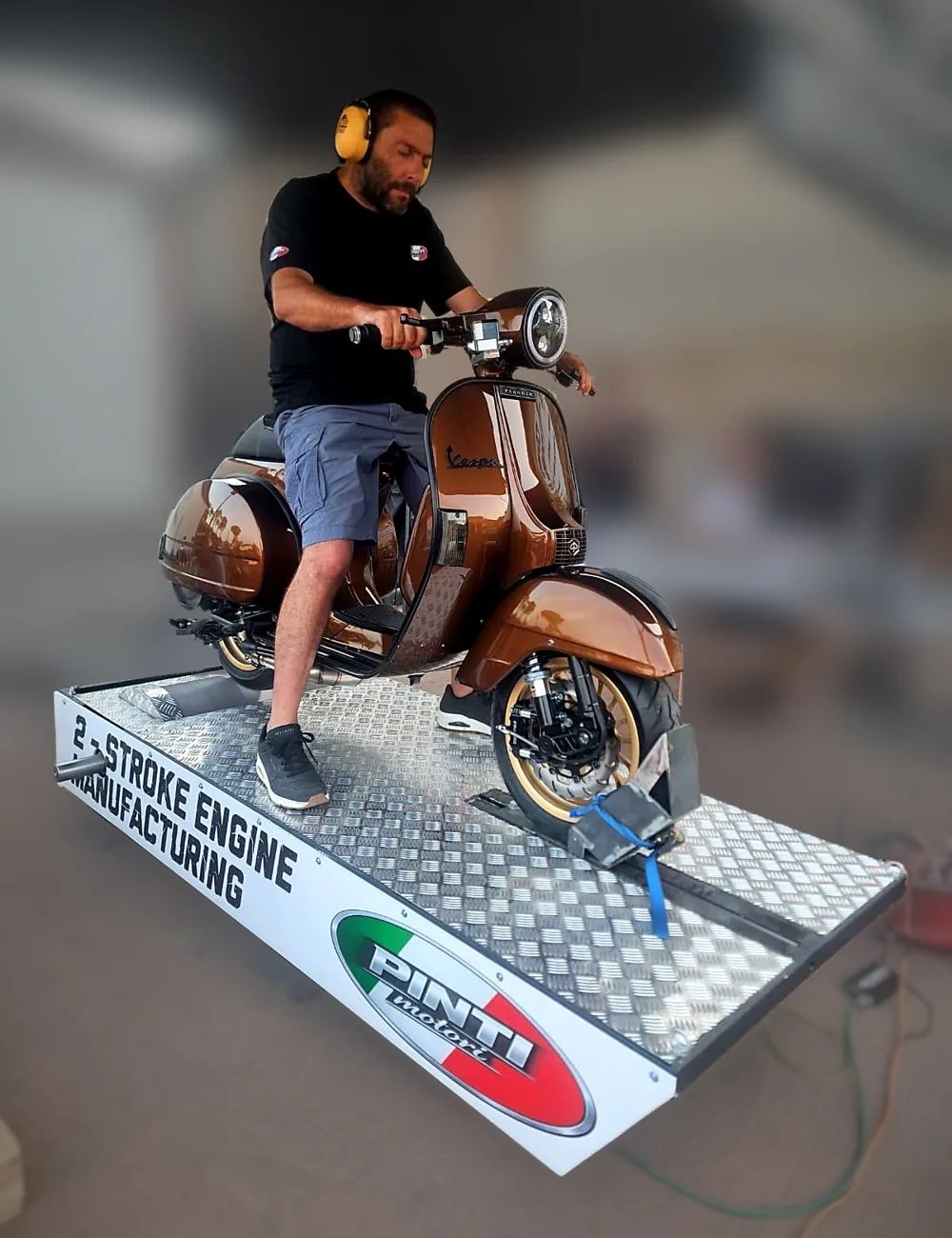
Daniele Pinti on the Pinti Motori dyno

Daniele Pinti has worked on two-stroke engines for more than thirty years.

He designs engines, casts his own cylinders in aluminum and cast iron, and tests them on his dyno. In the workshop they call it “the Wailing Wall”: there the numbers tell the truth, good or bad.

The cylinder on the cover, the C.60, is one of his.

About Daniele · Completed projects

Out now

Out now, on Amazon.

In paperback, on Amazon.com and Amazon.co.uk. Questions about the book? Press “Stay in touch” and write to me.